MHEART
Engineering workbench · 4.7-elm · VH155
Stirling generator development · 10 September 2026

1,000 W fuel in.
200 W net electric is still the target.

A review of the actual VH155 project, with a lower-loss thermal-neck candidate, reproducible dynamics, an instrumentation PCB, and a parts register that identifies what is ready to build.

ENGINE BUILD RELEASE: HOLD. Whole-engine performance and assembly acceptance have not passed. No manufactured engine or powered PCB was available for physical validation.
Original assembly · FreeCAD 1.1.324 overlapping pairs62 moving/fixed interference occurrences in 12 poses.
New neck · CalculiX on VH15568.5 W heat leak34.4% below the earlier 104.4 W neck candidate.
Larger-stroke reduced model209.5 W conditional netIsothermal model, assumed rectifier and auxiliaries. Above 200 W only under the listed model assumptions; full engine remains on hold.
ASSEMBLY FAIL

The interference is visible in native CAD.

Actual FreeCAD assembly with overlapping parts in red

The original 46 solids have 24 overlaps. A sampled sweep also collides with flexure blanks and other fixed parts. Red identifies affected parts. This is a clearance audit, not a successful assembly animation.

Open the audited FreeCAD file →
COMPONENT IMPROVEMENT

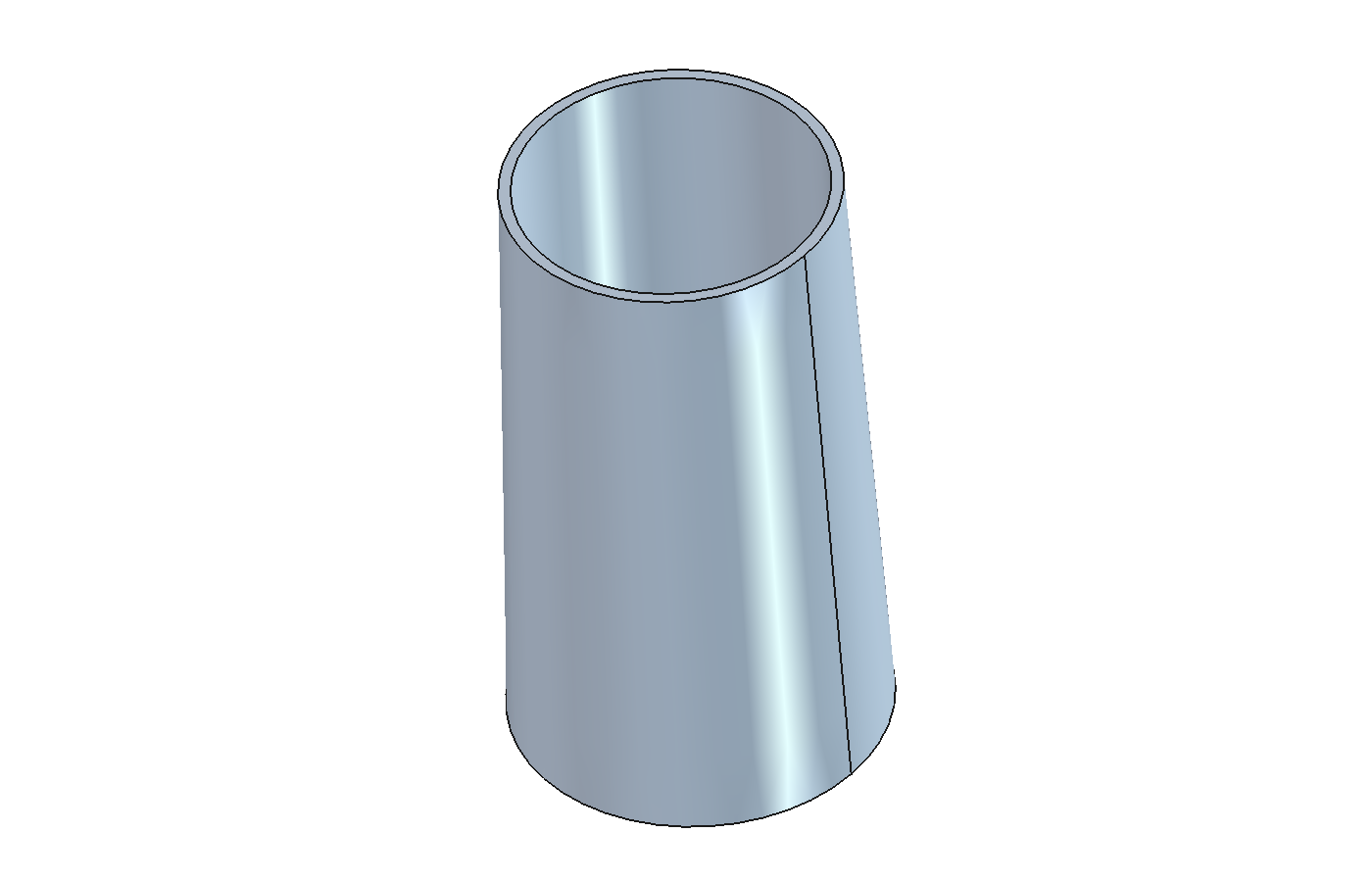
A continuous, longer thermal neck.

Revised continuous tapered neck in FreeCAD

HAYNES230 candidate, 120 mm long, Ø56 mm bore, wall thickness 6 → 2.2 mm. Removing the sharp wall-thickness step and increasing length reduce the calculated heat bridge.

Open tube only. Pressure closures, thermal stress, joints, creep and fatigue remain unqualified.

Open the editable dimensions →

What prevents an engine release

  1. The original 223 W result used prescribed motion and efficiency factors; it did not close 1,000 W fuel input.
  2. Unscaled free-piston dynamics initially overstroke. Added screen damping and spring/load refinement produce a conditional 209.5 W point, requiring more piston travel. Finite heat transfer and measured loss calibration remain open.
  3. The complete revised gas passages, springs, alternator, seals and hot clearances have not been drawn and validated together.
  4. The measurement PCB is a prototype aid. The engine inverter, startup control, dump protection and burner safety controller are not released designs.
  5. Real 200 W acceptance needs calibrated fuel input, terminal power after auxiliaries, coolant calorimetry, stable strokes and the agreed operating life.